


 Cart
Cart
 sales@molnova.com


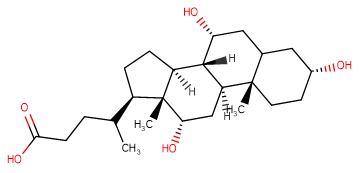
Cholic Acid
CAS No. 81-25-4
Cholic Acid( Cholalic Acid | Cholalin | NSC 6135 )
Catalog No. M16037 CAS No. 81-25-4
ApplicationNon-denaturing ionic detergent used for extraction of membrane proteins.
Purity : >98% (HPLC)
 COA
Datasheet
HNMR
HPLC
MSDS
Handing Instructions
COA
Datasheet
HNMR
HPLC
MSDS
Handing Instructions
| Size | Price / USD | Stock | Quantity |
| 100MG | 45 | Get Quote |


|
| 1G | 61 | Get Quote |
|
Biological Information
-
Product NameCholic Acid
-
NoteResearch use only, not for human use.
-
Brief DescriptionApplicationNon-denaturing ionic detergent used for extraction of membrane proteins.
-
DescriptionApplicationNon-denaturing ionic detergent used for extraction of membrane proteins. (In Vitro):Cholic acid (1 mg/mL, 30 min) competitively binds Na+/taurocholate cotransporting polypeptide (NTCP) on HepG2 cells and significantly inhibits the uptake of Cholic acid (CA)-nanoliposomes (LPs)-Doxorubicin (DOX)-HCl, which indicates that CA-LPs-DOX-HCl are also uptaken via NTCP-mediated endocytosis pathway.(In Vivo):Cholic acid (1% (w/w) Cholic acid-supplemented diet; p.o.; 14 days) decreases SHP (small heterodimer partner) protein expression, potentially via the upregulation of miR142-3p. Cholic acid increases CYP2D6 expression and activity.
-
In VitroCholic acid (1 mg/mL, 30 min) competitively binds Na+/taurocholate cotransporting polypeptide (NTCP) on HepG2 cells and significantly inhibits the uptake of Cholic acid (CA)-nanoliposomes (LPs)-Doxorubicin (DOX)-HCl, which indicates that CA-LPs-DOX-HCl are also uptaken via NTCP-mediated endocytosis pathway.
-
In VivoCholic acid(1% (w/w) Cholic acid-supplemented diet; p.o.; 14 days) decreases SHP (small heterodimer partner) protein expression, potentially via the upregulation of miR142-3p. Cholic acid increases CYP2D6 expression and activity. Animal Model:Tg-CYP2D6 adult male mice (8 weeks of age and weighing 20–25 g) Dosage:1% (w/w) Cholic acid-supplemented diet Administration:Oral, 14 days Result:Decreases SHP expression and increased CYP2D6 activity.
-
SynonymsCholalic Acid | Cholalin | NSC 6135
-
PathwayOthers
-
TargetOther Targets
-
RecptorOthers
-
Research AreaOther Indications
-
Indication——
Chemical Information
-
CAS Number81-25-4
-
Formula Weight408.58
-
Molecular FormulaC24H40O5
-
Purity>98% (HPLC)
-
SolubilityDMSO: 10 mM
-
SMILESC[C@@]12[C@@H](C(C)CCC(O)=O)CC[C@@]1([H])[C@]3([H])[C@H](O)CC4C[C@H](O)CC[C@]4(C)[C@@]3([H])C[C@@H]2O
-
Chemical Name4-((3R,7R,8R,9S,10S,12S,13R,14S,17R)-3,7,12-trihydroxy-10,13-dimethylhexadecahydro-1H-cyclopenta[a]phenanthren-17-yl)pentanoic acid
Shipping & Storage Information
-
Storage(-20℃)
-
ShippingWith Ice Pack
-
Stability≥ 2 years
Reference
1.Wu Y, et al. J Biomed Nanotechnol. 2015 Jul;11(7):1247-60.
molnova catalog



related products
-
Arecoline
Arecoline is an agonist at both muscarinic and nicotinic acetylcholine receptors. It is used in the form of various salts as a ganglionic stimulant, a parasympathomimetic, and a vermifuge, especially in veterinary practice.
-
Aminomalonic acid
Aminomalonic acid (Ama) was first detected in alkaline hydrolysates of proteins in 1984. Ama has been isolated from proteins of Escherichia coli and human atherosclerotic plaque. The presence of Ama has important biological implications because the malonic acid moiety potentially imparts calcium binding properties to protein.
-
1,18-Octadecanediol
1,18-Octadecanediol is a compound derived from Spartium japonicum that acts as a lubricant and reduces cancer in animal studies.
